Visual Supports: Empowering Children in Sports and Arts Programs
At BallFour, we believe every child deserves the chance to thrive, discover their strengths, and experience the joy of participation. For children with neurodivergence, including autism, navigating new environments and understanding complex instructions can sometimes be a challenge. This is where visual supports become an invaluable tool, transforming potential barriers into pathways for engagement and success in sports and arts programs.
Visual supports are more than just pictures; they are a bridge to understanding, offering clarity, predictability, and a sense of control for young participants. By providing concrete cues, these tools help children grasp concepts, manage transitions, and express themselves, fostering greater independence and confidence.
This article will explore the profound impact of visual supports, detailing how they are effectively used to enhance learning and enjoyment in both athletic and creative settings, ensuring that every child can fully participate and shine.
Understanding the Power of Visual Supports
Visual supports are any visual cue, object, or tool that helps an individual understand and respond to their environment. This can include pictures, diagrams, written words, schedules, choice boards, or even gestures. For children, especially those with neurodivergence, visual information is often processed more effectively than auditory instructions alone.
These supports are incredibly versatile and beneficial for a wide range of individuals. As highlighted by Little Athletics Australia, they assist younger athletes, those with disabilities, individuals who process information differently, and even those for whom English is a second language. By making expectations and sequences explicit, visual supports reduce anxiety, promote comprehension, and build crucial life skills.
The core principle is simple: seeing often leads to better understanding than just hearing. Visual aids can teach new words, abstract ideas, or complex concepts, making learning more accessible and less overwhelming for every child.
Enhancing Participation in Sports Programs
Sports programs offer incredible opportunities for physical development, teamwork, and social interaction. Visual supports can make these experiences more inclusive and enjoyable for children with neurodivergence by breaking down activities into manageable steps and clarifying expectations.
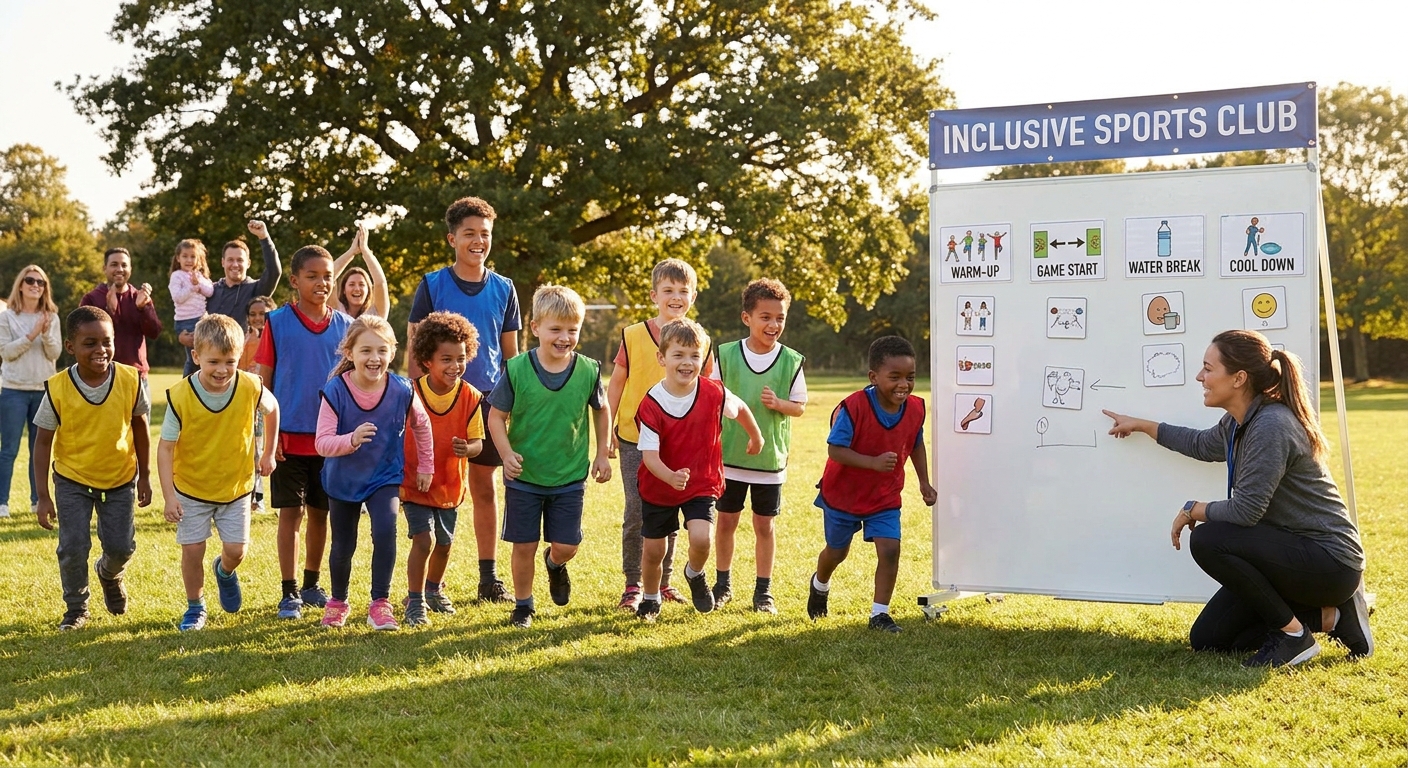
For instance, when introducing a new game or exercise, coaches can use diagrams to illustrate the rules or the sequence of actions. Elevo Learning emphasizes using visual supports like diagrams while also demonstrating movements, creating a multi-sensory learning experience. A visual schedule can outline the progression of a practice session, from warm-up to specific drills, to cool-down, helping children anticipate what comes next.
Consider a child learning baseball: a visual sequence showing “first, put on glove,” “then, hold bat,” “next, stand at plate” can be incredibly helpful. Resources like those shared by Autism Little Learners on social media demonstrate how readily available and customizable these tools can be for specific sports activities. Visual timers can also be used to indicate the duration of an activity or how long a child needs to wait for their turn, promoting patience and understanding of time.
Fostering Creativity in Arts Programs
Arts programs provide a unique outlet for self-expression, imagination, and fine motor skill development. Visual supports are equally powerful in these creative spaces, helping children understand art processes, manage materials, and express their artistic vision.
ArtsConnection notes that visual supports can be an inspiration for artmaking itself, providing ideas or themes to spark creativity. For children who might struggle with open-ended tasks, visual choice boards can offer options for art materials, colors, or subjects, giving them agency within a structured framework.
Step-by-step visual instructions are invaluable for craft projects or drawing exercises. Imagine a child creating a sculpture: a series of pictures demonstrating “first, roll clay,” “then, shape body,” “next, add details” can guide them through the process without overwhelming verbal instructions. Visual schedules can also help establish routine in an art class, showing “gather materials,” “create art,” “clean up,” which builds independence and helps children manage transitions gracefully.
Practical Tips for Implementing Visual Supports
Integrating visual supports into sports and arts programs doesn’t require extensive resources. Often, simple, clear, and consistent visuals are the most effective. Here are some practical tips:
- Keep it Simple: Use clear, uncluttered images or symbols that are easy to understand.
- Be Consistent: Use the same visuals for the same activity or instruction each time.
- Personalize: Tailor visuals to the child’s interests and specific needs whenever possible.
- Introduce Gradually: Start with a few key visuals and expand as the child becomes comfortable.
- Involve the Child: Allow the child to help choose or create some visuals, fostering ownership.
- Make it Accessible: Place visuals at eye level and in easily visible locations.
- Use a Variety: Combine different types of visual supports—schedules, choice boards, first/then boards—to address various needs.
There are many readily available resources to help create visual supports. The Center for Community Inclusion and Disability Studies at the University of Maine offers excellent learning links and templates, including a Visual Supports Checklist. Similarly, the Head Start Center for Inclusion provides libraries of commonly used pictures and guidance on creating and using tools like social stories, which help children understand social situations and expectations.
Creating Inclusive Spaces for Every Child
Visual supports are more than just a teaching aid; they are a cornerstone of truly inclusive programming. By thoughtfully integrating these tools, BallFour and similar organizations can create environments where every child, including those with neurodivergence, feels understood, capable, and excited to participate.
The joy of scoring a goal, completing an art project, or making a new friend should be accessible to all. Visual supports empower children by providing clarity and confidence, allowing them to focus on the fun and developmental benefits of sports and arts. We are committed to fostering these opportunities, nurturing resilience, teamwork, and hope in every young life we touch.
If you’re a parent, coach, or educator interested in learning more about how BallFour champions inclusive youth development through sports, we encourage you to connect with us. We are always eager to share our insights and support our community. You can reach out directly via email at contactus@ballfour.org to discover more about our programs and how we help children with neurodivergence thrive.
Key Takeaways
- Visual supports enhance understanding and participation for children with neurodivergence in sports and arts.
- They provide clarity, predictability, and reduce anxiety, fostering independence and confidence.
- Simple, consistent, and personalized visual aids can be easily implemented to create more inclusive environments.