Restaurants, Stores, and Waiting Rooms: Making Public Outings Easier for Every Child
Public outings, from a trip to a favorite restaurant to a visit to the local store, are integral parts of family life and community connection. Yet, for families with children who are neurodivergent or have autism, these experiences can sometimes feel overwhelming. Unpredictable environments, long waits, and sensory overload can turn what should be an enjoyable outing into a source of stress and anxiety.
At BallFour, we believe every child deserves the opportunity to participate fully in community life, fostering resilience and a sense of belonging. Creating inclusive public spaces is a powerful way to support this vision, enabling families to engage with ease and joy. This article explores practical ways businesses and communities can adapt to make public outings more accessible and enjoyable for all children.
Understanding the Unique Journey of Neurodivergent Children in Public Spaces
Children with neurodivergence, including autism, often process the world differently. Bright lights, loud noises, strong smells, or unexpected changes in routine can be incredibly disorienting. Waiting, especially without clear information or engaging activities, can lead to heightened anxiety and behavioral challenges, not because a child is misbehaving, but because their nervous system is struggling to cope with the sensory and social demands of the environment.
Recognizing these challenges is the first step toward building truly inclusive communities. When businesses thoughtfully consider the psychological and sensory needs of neurodivergent children, they open their doors to more families, creating a welcoming atmosphere where every child feels understood and valued.
Transforming Waiting Areas into Welcoming Havens
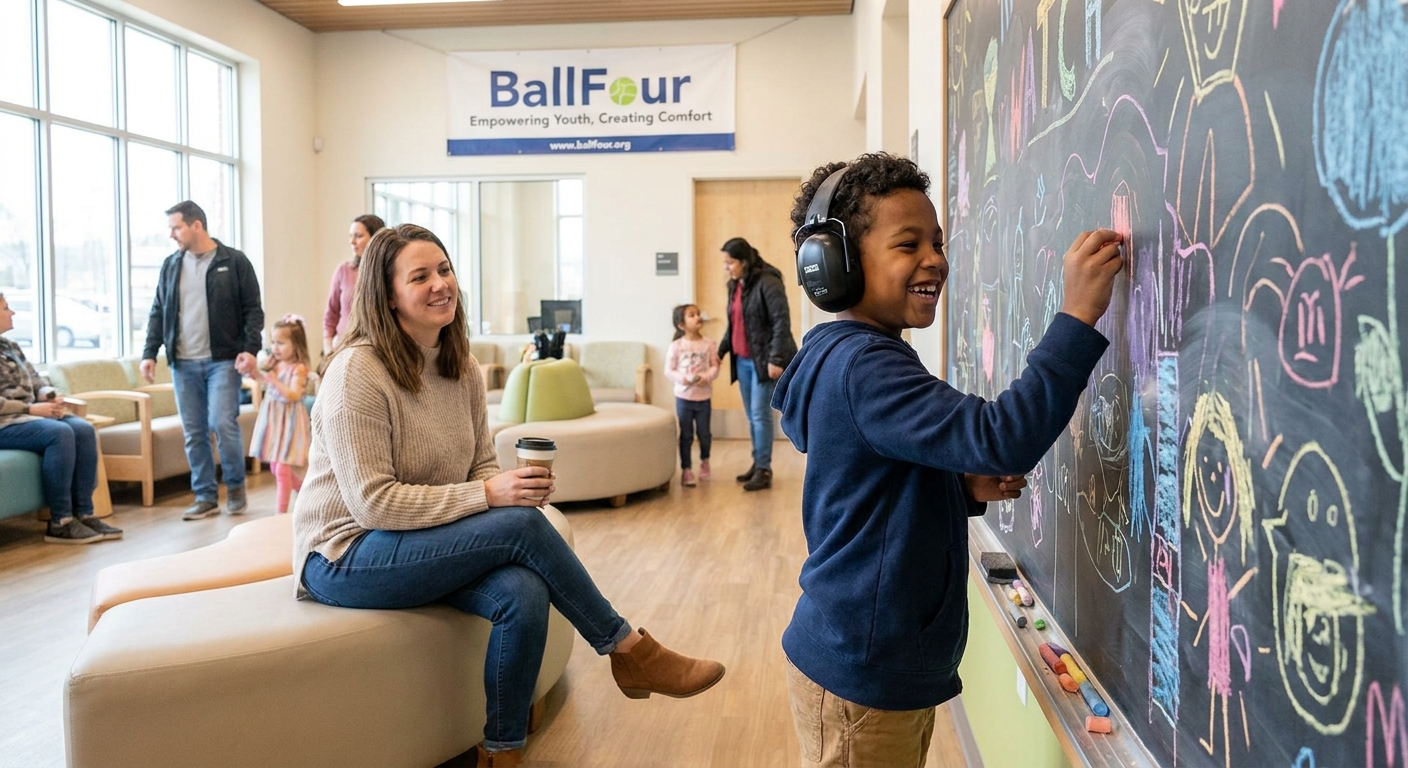
The waiting area often sets the tone for an entire public outing. Instead of a source of dread, these spaces can become opportunities for calm and engagement. Thoughtful design and simple additions can make a significant difference, as highlighted by innovations in various establishments. For instance, creating interactive mini-experiences or providing comfort-driven technology can greatly improve a family’s experience.
Comfort is paramount. Ensuring there’s always accessible, comfortable seating is essential, avoiding setups that feel cramped or overstimulating. Interactive elements like a chalkboard wall where children can doodle or leave messages, or smart screens showing calming visuals or educational content, can turn idle time into engaging moments. For healthcare settings, research shows that children’s play areas help reduce anxiety, with hard toys being easier to clean and maintain hygiene.
Technology can also be a valuable ally. Offering free Wi-Fi, device charging stations, and varied television options can help children stay engaged with familiar content or allow parents to use apps that support their child’s needs. Some establishments even offer pagers, allowing families to step outside for a walk or find a quieter spot until their turn, reducing the pressure to sit still in a potentially overwhelming environment.
Creative Approaches to Dining and Shopping
Beyond waiting rooms, the main experience of dining or shopping can be adapted for greater inclusion. Many businesses are exploring creative uses of space, such as expanding outdoor dining areas. For some neurodivergent children, the open air and natural light of an outdoor setting can be less overwhelming than an enclosed, noisy indoor space. Experts suggest that outdoor environments can sometimes feel safer and more calming.
Clear communication is another key. Knowing what to expect reduces anxiety for both children and parents. Businesses can provide information online about their busiest times, noise levels, or available quiet zones. Self-serve kiosks, now common in many retail and restaurant settings, can also streamline the check-in process, reducing verbal interactions and the stress of waiting in line.
Moreover, simple gestures like staff being aware of a child’s unique needs can transform an outing. Training staff in neurodiversity awareness can equip them to offer subtle support, like guiding families to a quieter table or understanding that a child might need to move around more than others.
Empowering Families Through Preparation and Partnership
While businesses play a crucial role, families also benefit from preparation. Using social stories, visual schedules, or preparing children for what to expect can significantly reduce anxiety. These tools help children mentally rehearse the outing, making the actual experience less daunting.
The synergy between thoughtful businesses and prepared families creates a truly inclusive environment. When restaurants, stores, and waiting rooms adopt practices that consider a broader range of needs, they not only welcome more patrons but also build a more compassionate and understanding community for everyone. These efforts reinforce BallFour’s commitment to ensuring that every child has the chance to thrive and enjoy the richness of community life.
At BallFour, we champion opportunities for children with neurodivergence to experience joy, growth, and connection. Our work focuses on creating spaces where these children can develop resilience, teamwork, and hope. If you’re a family seeking resources or a community organization looking to make your spaces more inclusive for children, we encourage you to reach out and learn more about our mission and the support we offer. Please contact us at contactus@ballfour.org to discover how we can work together to empower children and families in your community.
Key Takeaways
- Thoughtful waiting room design, including comfortable seating, interactive elements, and accessible technology, significantly reduces anxiety for neurodivergent children.
- Utilizing outdoor spaces and clear communication strategies in restaurants and stores can create less overwhelming environments for families.
- Partnerships between businesses and families, coupled with staff awareness, are essential for fostering truly inclusive public outings for every child.