Understanding Attention: Diverse Ways Children Engage with the World
In our fast-paced world, “paying attention” is often seen as a singular skill, a simple on-off switch. Yet, for many children, especially those who are neurodivergent or on the autism spectrum, attention is a complex tapestry of focus, awareness, and engagement that looks wonderfully different in daily life. At BallFour, we believe in celebrating these unique strengths and understanding the diverse ways young minds interact with their environment.
This article explores what attention truly looks like beyond traditional expectations, delving into the various forms it takes and how these differences impact children in their homes, schools, and communities. By shifting our perspective, we can better support every child’s journey towards growth, opportunity, and belonging.
Beyond a Single Focus: The Many Faces of Attention
The concept of “attention” is far richer than just focusing on one thing. Experts identify several distinct types of attention that our brains use every day. These include focused attention, which is the ability to respond to specific stimuli; sustained attention, which allows us to maintain focus over time; and selective attention, which helps us filter out distractions to concentrate on what’s important. Then there’s alternating attention, enabling us to switch focus between tasks, and divided attention, where we try to manage multiple tasks simultaneously, such as listening to a podcast while reading.
For children, the way these types of attention manifest can vary significantly. What might appear as a “lack of attention” could actually be a child deeply immersed in a different sensory experience, or struggling with the cognitive load of a specific type of attentional task. Understanding these nuances is the first step towards creating more inclusive and supportive environments.
Neurodivergent Attention: A Unique Profile, Not a Deficit
For children who are neurodivergent, including those with autism, attention differences are often a core part of their psychological profile. Rather than viewing these as deficits, BallFour recognizes them as unique ways of processing and engaging with the world. For instance, a child might exhibit intense hyperfocus on a topic of interest, demonstrating remarkable sustained attention in that area, while struggling with selective attention in a noisy classroom.
Research suggests that social attention, how we attend to social cues and interactions, can also undergo developmental differences. For neurodivergent children, this might mean processing social information differently, which can impact social interactions and learning. Recognizing these variations helps us appreciate the diverse cognitive landscapes of young minds and design support systems that truly resonate with their needs.
Everyday Life: Challenges and Hidden Strengths
How do these attention differences play out in a child’s daily life? At home, it might mean a child struggles to transition between activities, or finds it challenging to follow multi-step instructions that require alternating attention. In school, selective attention difficulties can make it hard to ignore background chatter and focus on the teacher, while issues with divided attention might make it difficult to take notes and listen simultaneously.
However, these differences often come with powerful strengths. The capacity for hyperfocus can lead to incredible depth of knowledge and skill in areas of passion. A child who processes information uniquely might offer novel perspectives and creative solutions. Rather than demanding conformity, our role is to help children navigate their attention profiles, leveraging their strengths while developing strategies for areas that present challenges.
Cultivating Focus and Engagement Through Understanding
Supporting children with diverse attention styles requires empathy, patience, and tailored approaches. Creating structured environments, providing clear expectations, and minimizing distractions can be incredibly beneficial. For children who struggle with divided attention, breaking tasks into smaller steps or offering visual aids can make a significant difference. Allowing children to pursue their deep interests can also harness their natural capacity for sustained and focused attention, turning learning into an exciting exploration.
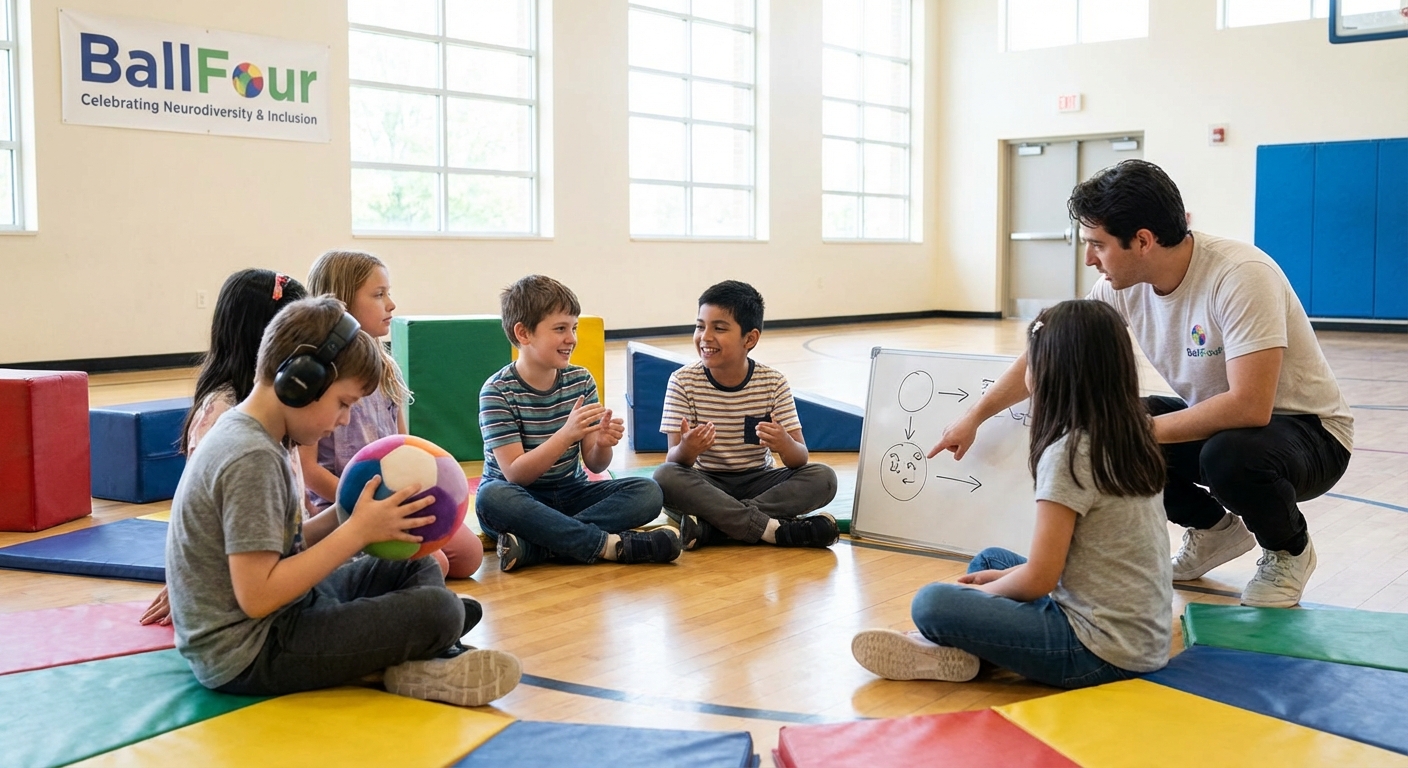
Engaging children in activities like sports, where the focus is often on specific actions, teamwork, and immediate feedback, can also provide a unique pathway for developing attention skills in a dynamic and enjoyable context. These experiences, grounded in play and positive interaction, build resilience and confidence.
Join BallFour in Championing Every Child’s Potential
At BallFour, we are dedicated to creating inclusive opportunities where all children, especially those with neurodivergence and autism, can thrive. We believe that by understanding and embracing the diverse ways children attend to the world, we can empower them to reach their full potential. Our programs focus on psychological well-being and growth, fostering an environment where every child feels seen, valued, and capable.
To learn more about our mission or discover how you can support our community efforts, please reach out to us. We welcome inquiries and partnerships that help us expand our reach and impact. You can connect with us directly at contactus@ballfour.org or explore our website for more information on our initiatives and the profound impact of sports-based development on young lives. Together, we can build a world where every child has the chance to shine.
Key Takeaways
- Attention is diverse, encompassing various types like focused, sustained, and selective attention, which manifest uniquely in different children.
- For neurodivergent children, attention differences are integral to their profile, often presenting as unique strengths like hyperfocus, rather than just deficits.
- Understanding and adapting to these diverse attention styles through tailored strategies and inclusive environments is crucial for fostering every child’s growth and well-being.