
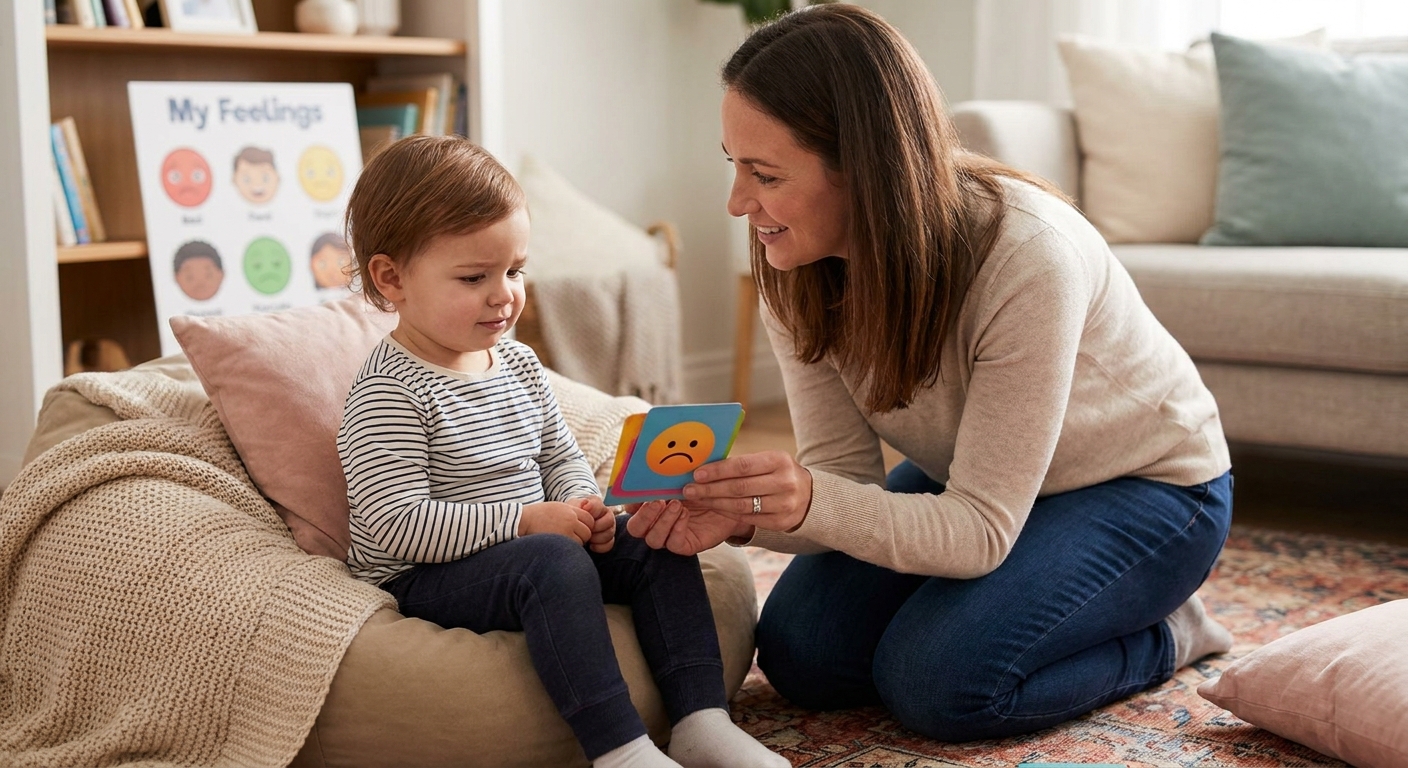
Watching your child struggle with big emotions can be one of the toughest parts of parenting, especially when frustration builds to an outburst. For families raising neurodivergent children, these moments can feel particularly intense as communication and emotional regulation may present unique challenges. At Ball Four Foundation, we understand that families don’t fail their children; systems and a lack of clear information often fail families. This article offers research-backed strategies for helping your child handle frustration and express their feelings in healthy ways.
What Does Frustration Look Like in a Neurodivergent Child?
Frustration is a natural human emotion, but for many children, particularly those with neurodevelopmental differences, it can manifest in ways that are difficult to understand or manage. Often, frustration and anxiety can express themselves as anger or behavioral outbursts, rather than clear statements of distress. Children may struggle to pinpoint what is bothering them or lack the words to describe their complex internal experiences, leading to actions like yelling, hitting, or withdrawing.
Neurodivergent children may experience frustration due to challenges in various areas. These can include difficulties with learning tasks, social interactions, or even sensory overload. When a child feels vulnerable or powerless in these situations, anger can become a default expression of their frustration. Understanding these underlying causes is the first step in how to help a child handle frustration effectively.
Why Is Expressing Frustration Often a Challenge?
Learning to articulate feelings is a developmental process that can be more complex for neurodivergent children. Many young children are still acquiring the language skills needed to describe their inner world, and some neurodivergent children may have language differences that make this even harder. They might also be developing impulse control and patience, which are crucial for managing intense emotions without lashing out.
When children lack the vocabulary to express themselves, physical actions like tantrums or aggression become a primary way to communicate needs or wants. Research indicates that preschool interventions focused on teaching children words to manage frustration can improve their socio-emotional competence. Equipping your child with emotional language is a powerful tool for supporting their development. For more insights on this topic, consider reading our article on Communication Beyond Words: Supporting a Child Who Speaks Differently.
How to Help Your Child Handle Frustration Effectively
Empowering your child to express frustration in a healthy way involves a combination of teaching, validation, and consistent support. Here are some strategies based on expert recommendations to guide you in helping your child deal with frustration.
One of the most effective approaches is to teach children specific words for their emotions. Parents can introduce a wide range of emotional terms, such as “frustrated,” “angry,” “sad,” “patient,” or “calm.” Connecting these words to physical sensations or situations helps children recognize and name what they are feeling. For instance, you might say, “I see your jaw is tight, are you feeling frustrated right now?” The American Psychological Association suggests that when children learn to notice and explain how they feel, they can use words to convey frustration instead of angry behaviors.
It is crucial to validate your child’s feelings while still setting clear boundaries for behavior. Let your child know that it’s okay to feel angry or frustrated, but it is not okay to take that anger out on others or objects. For example, you can say, “It’s understandable to feel mad that your toy broke, but hitting isn’t safe.” Understood.org advises this approach, emphasizing that children often feel ashamed of their behavior once they calm down.
Offering choices can give your child a sense of control during moments of intense emotion. If your child is upset about stopping an activity, try offering a choice related to the next step. The American Academy of Pediatrics suggests, “Do you want to wear your red pajamas or your striped ones?” This redirects their focus and empowers them.
Modeling calm behavior yourself is another powerful tool for helping your child express frustration. Children often learn by observing the adults around them. If you respond to your own frustrations with quiet, peaceful ways, your child is likely to follow that example. The American Academy of Pediatrics also notes that young children need adults to teach them to use words instead of physical actions when they are angry. HealthyChildren.org recommends teaching your child to use words to resolve conflicts, such as saying “no” firmly or compromising.
Finally, praise your child when they successfully use words or identify their feelings, especially when they choose this over an outburst. This positive reinforcement encourages them to repeat the desired behavior. Recognise their effort in using words and communicate your appreciation for their efforts. For more detailed guidance on understanding different types of emotional outbursts, you might find our article on Understanding Meltdowns vs. Tantrums: What’s Really Happening helpful.
Practical Steps to Support Emotional Expression
- Teach a Feeling Vocabulary: Introduce words like “frustrated,” “annoyed,” “disappointed,” and “angry.” Use emotion charts or feelings wheels to help them connect words to facial expressions and body language.
- Connect Words to Body Sensations: Help your child link emotions to how their body feels (e.g., “When you’re mad, does your stomach feel tight?”).
- Validate Their Feelings: Acknowledge their emotion by saying, “I see you’re feeling really mad right now.”
- Set Clear Boundaries: While validating feelings, clearly state what behaviors are not okay. “It’s okay to be angry, but hitting is not allowed.”
- Offer Choices: Give your child limited, appropriate choices to help them feel some control during emotional moments.
- Practice Calming Strategies: Teach simple phrases like “I can stay calm and patient,” or suggest activities like deep breathing or drawing their feelings.
- Model Healthy Expression: Show your child how you handle your own frustrations calmly and verbally.
- Praise Efforts: Acknowledge and praise your child when they try to use words to express their frustration, even if it’s not perfect. The American Psychological Association encourages telling children to always use words to show what they are feeling.
Key Takeaways
- Frustration often appears as anger or challenging behaviors in neurodivergent children.
- Difficulty with language and impulse control can make expressing frustration harder.
- Teaching emotional vocabulary is a foundational step in helping your child handle frustration.
- Validating feelings while setting clear behavioral boundaries helps children feel understood and secure.
- Modeling calm reactions and praising positive communication reinforces desired behaviors.
Helping your child navigate big feelings like frustration is a continuous journey. With patience, clear communication, and consistent strategies, you can empower your child to develop stronger emotional regulation skills. For more resources and practical guidance, we invite you to explore the resource library. Explore the resource library